To help prevent children’s tooth decay, the CSA recommends that caregivers use a smear of fluoride toothpaste (or an amount about the size of a grain of rice) for children younger than 3 years old and a pea-size amount of fluoride toothpaste for children 3 to 6 years old.
Monday, May 19, 2014

Tuesday, February 25, 2014
Importance of flossing

Special offer

If you have been looking for a dentist then look no further . We are offering a new patient special of $99 dollars. This special consists of a Complete Exam, X-Rays & a Dental Cleaning. Please contact us at (310) 322-1814 to take advantage of this offer or to inquire about our other sevices we offer.
Friday, February 21, 2014
Dental implants
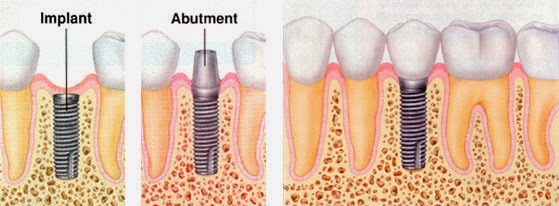
What Are the Advantages of Dental Implants?
There are many dvantages to dental implants, including:
- Improved appearance. Dental implants look and feel like your own teeth. And because they are designed to fuse with bone, they become permanent.
- Improved speech. With poor-fitting dentures, the teeth can slip within the mouth causing you to mumble or slur your words. Dental implants allow you to speak without the worry that teeth might slip.
- Improved comfort. Because they become part of you, implants eliminate the discomfort of removable dentures.
- Easier eating. Sliding dentures can make chewing difficult. Dental implants function like your own teeth, allowing you to eat your favorite foods with confidence and without pain.
- Improved self-esteem. Dental implants can give you back your smile and help you feel better about yourself.
- Improved oral health. Dental implants don't require reducing other teeth, as a tooth-supported bridge does. Because nearby teeth are not altered to support the implant, more of your own teeth are left intact, improving long-term oral health. Individual implants also allow easier access between teeth, improving oral hygiene.
- Durability. Implants are very durable and will last many years. With good care, many implants last a lifetime.
- Convenience. Removable dentures are just that; removable. Dental implants eliminate the embarrassing inconvenience of removing dentures, as well as the need for messy adhesives to keep them in place.
Tuesday, February 18, 2014

- The average woman smiles about 62 times a day! A man? Only 8! Kids laugh around 400 times a day. Grown-ups just 15 :-(
- Academy of General dentistry, the average person only brushes for 45 to 70 seconds a day, the recommended amount of time is 2-3 minutes.
- If you're right handed, you will chew your food on your right side. If you're left handed, you will tend to chew your food on your left side.
- People who drink 3 or more sugary sodas daily have 62% more dental decay.
- Research says that people with periodontal disease (Gum disease) are at higher risk for developing heart disease, stroke, uncontrolled diabetes, pre-term births and respiratory disease.
- People with gum disease are twice as likely to suffer from coronary artery disease as those without disease.
Friday, February 7, 2014

Bonding teeth
If you have a cracked or chipped tooth or teeth, you may be a candidate for dental bonding. Dental bonding involves the application of a tooth-colored plastic adhesive that your dentist will shape and polish to match the surrounding teeth. Dental bonding is relatively painless and is usually performed without anesthesia. If you’re having tooth bonding done on several teeth, you may need to schedule more than one visit; a dental bonding procedure on one tooth takes anywhere from 30 minutes to an hour.
When you undergo dental bonding, the dentist first roughens the surface of the tooth or teeth that will be treated, and then he or she applies a conditioning solution to help the bonding material stick to the tooth. Then the bonding material is applied to the teeth and shaped to fit and an ultraviolet light or laser is used to harden it into place.
Thursday, January 23, 2014

Approximately 35,000 Americans are diagnosed each year with this largely preventable type of cancer that affects the mouth and/or part of the throat. Most oral cancers are related to tobacco use, alcohol use, or both. You can help reduce your risk for oral cancer by avoiding all tobacco products and drinking alcohol only in moderation.
Early Detection
Because oral cancer can spread quickly, early detection is important. An oral cancer exam can identify early signs of this disease. The exam is quick and painless, and can be done during your regular dental check-up. Be sure to tell your dentist if you notice persistent changes in your mouth or throat, such as sores, swelling, or numbness, or if you have difficulty eating or swallowing.
If you have yet to have an oral cancer screening please make an appointment with us at (310)322-1814
Wednesday, January 22, 2014

A healthy mouth is more than just brushing and flossing. Your eating patterns and food choices also play an important role in preventing tooth decay and gum disease.
Fiber-rich fruits and vegetables: Foods with fiber stimulate saliva flow, which is a natural defense against cavities. Not only does saliva wash away food particles and clean your mouth, about 20 minutes after you eat something, saliva begins to neutralize the acids attacking your teeth. Crisp fruits and vegetables like apples, carrots and celery not only help stimulate saliva flow, but also help clean plaque from teeth and freshen breath.
heese, milk, plain yogurt and other dairy products: The calcium, phosphates and vitamin D in cheese, milk and other dairy products are important minerals for the health of your teeth. Your teeth are made mostly of calcium, and without enough in your diet, you risk developing tooth decay and other problems. An added benefit is that the calcium in these foods mixes with plaque and sticks to teeth, protecting them from acids that cause decay and helping to rebuild tooth enamel on the spot. Worried you won’t get enough calcium because you are allergic to milk or just don’t like the taste? There are many calcium-fortified juices, soy milks and other foods available that can supply as much calcium to your diet as milk does.
Remember, for good dental health, keep these tips in mind when choosing your meals and snacks:
- Drink plenty of water.
- Eat a variety of foods from each of the five major food groups, including: whole grains; fruits; vegetables; lean sources of protein such as lean beef, skinless poultry and fish, dry beans, peas and other legumes; low-fat and fat-free dairy foods.
Tuesday, January 21, 2014

- Brush your teeth twice a day with fluoride toothpaste. Make sure to brush for at least three minutes; it takes several minutes of brushing to do a thorough job.
- Use floss or an interdental cleaner daily.
- Eat a balanced diet and limit sugary or carbohydrate-loaded snacks.
- Look for the American Dental Association (ADA) Seal on fluoride toothpaste, toothbrushes, floss, interdental cleaners, oral irrigators, mouth rinses and other oral hygiene products. The ADA Seal on a product is your assurance that it has met ADA criteria for safety and effectiveness.
- Use a toothbrush with soft bristles. Toothbrushes with medium or hard bristles actually can wear away tooth structure over time.
- Replace your toothbrush at least every four months, sooner if the bristles become frayed. (Children’s toothbrushes often need replacing more frequently than adults’ because they can wear out sooner.)
- Visit your dentist regularly for professional cleanings and oral exams.
Wednesday, December 18, 2013

Gingivitis is an inflammation of the gum
tissues surrounding the teeth, and is an early stage of gum disease. If
left untreated, gingivitis may progress to periodontitis,
which can be a major cause of tooth loss in adults. Gingivitis can
sometimes be painless and, therefore, people may be unaware they have
it. Come visit our dental office for an assessment to learn more about gingivitis
and good oral hygiene.
What Causes Gingivitis
One of the primary factors contributing to gingivitis is plaque buildup, a sticky colorless deposit of bacteria that regularly forms on teeth. These bacteria build up and can create byproducts that can damage the gums.
While gingivitis is a milder and reversible form of gum disease, it may lead to more serious, destructive forms if left untreated.Tuesday, December 17, 2013
The importance of dental sealants

SEALANTS
Sealants are a very common dental treatment recommended for children to protect the areas of the teeth that are the most vulnerable. They help prevent tooth decay in the newly erupted premolars and molars that will stay with your child for their lifetime. Sealants are placed in the deep grooves and pits of the teeth where plaque can hide. Most children, no matter how well they brush, are unable to reach and clean these areas properly. The sealant acts as a barrier and seals out food and bacteria. This helps prevent cavities! Your dentist and dental hygienist will inform you of when your child’s adult teeth are ready for sealants.
Wednesday, December 4, 2013
T
Gingival Plaque
To prevent cavities, you need to remove plaque, the
transparent layer of bacteria that coats the teeth. The best way to do
this is by brushing your teeth twice a day and flossing at least once a
day. Brushing also stimulates the gums, which helps to keep them healthy
and prevent gum disease. Brushing and flossing are the most important
things that you can do to keep your teeth and gums healthy.
About 1 person in 10 has a tendency to accumulate tartar
quickly. Tartar is plaque in a hardened form that is more damaging and
difficult to remove. Using anti-tartar toothpastes and mouthwashes, as
well as spending extra time brushing the teeth near the salivary glands
(the inside of the lower front teeth and the outside of the upper back
teeth) may slow the development of new tartar.
Tuesday, December 3, 2013

White Teeth
Don't smoke , try to limit tea or coffee . Our office now offers teeth whitening solutions . Please call our office at ( 310 ) 322 - 1814 to set up an appointment today !!! (:
Tuesday, September 3, 2013

15 Snacks to fuel your work day
1. Nuts
2. Whole grain bread with nut butter. Peanut, tahini or almond.
3. Apples with Peanut Butter
4. Olives
5.Edamame
6.Vegetables
7. Hummus
8.Fresh fruit
9. Dried Fruit
10.Apple Chips
11.Yogurt
12.Ricotta cheese
13. Trial Mix
14. Granola or protein bars
15.Tea green, black or herbal
Thursday, August 29, 2013

What A Parent Really Needs To Know To Prevent Cavities For Their Children...
A few years ago there was a movie by the late Gilda Radner from Saturday Night Live. One segment was about how we learn so much in school that we do not really remember very much at all and how school should concentrate on teaching us the �stuff� that really matters so that after we graduate we have some useful knowledge. Of course it was a spoof, but the audience laughed because there really was some truth in it. Think about all the courses you took in school and how much you really remember or use very often. That seems like an interesting subject for this section about education.So what do parents who want to help their kids avoid cavities and save time and money in the process, really need to know and do?
In other words, lots of things are really helpful and good to do, like brushing after meals. But most kids do brush after at least some meals and still get cavities, so that is obviously not it. How about not eating sugar for desert? Another good idea, but many parents are pretty good about avoiding deserts, and still their kids get cavities. So that is not it either. How about going for check ups at the dentist? Most kids do go to the dentist for check ups, and that still does not stop decay for many kids. So that is not it either. What is it that will help?
Well, like we used to have the 3 R�s in school, Reading, R�iting and R�ithmatic, there are the 4 F�s in dentistry. Flossing, Food, Fluoride and Frequency (of dental check ups.)
Friday, August 9, 2013

What is a dental crown?
A crown is a type of dental restoration which completely caps or encircles a tooth or dental implant Crowns are often needed when a large cavity threatens the ongoing health of a tooth. They are typically bonded to the tooth using a dental cement. Crowns can be made from many materials, which are usually fabricated using indirect methods.
Crowns are often used to improve the strength or appearance of teeth.

Brushing your teeth
Here are some tips for taking care of your child’s teeth:
- Choose a small, child-sized, soft-bristled toothbrush. Soaking the brush in warm water for a few minutes before brushing can soften the bristles even more.
- Many dentists recommend using only plain water for brushing up to the age of 2. This is because young children swallow toothpaste and swallowing too much fluoride may lead to tooth discoloration in permanent teeth. Ask your dentist if toothpaste should be used. Also, check the manufacturer's label; some toothpastes are not recommended in children under age 6. If a toothpaste is to be used, squeeze out about a green pea-size amount of fluoride toothpaste onto the toothbrush.
- Brush your child's teeth twice a day – in the morning and just before bed. Spend 2 minutes brushing, concentrating a good portion of this time on the back molars. This is an area where cavities often first develop.
- Replace the toothbrush every 3 or 4 months, or sooner if it shows signs of wear. Never share a toothbrush with others.
- Start flossing your child's teeth once a day as soon as two teeth emerge that touch. The use of floss sticks or picks instead of regular string floss may be easier for both you and your child.
- Ask your dentist about your child's fluoride needs. If your drinking water is not fluoridated, fluoride supplements or fluoride treatments may be needed.
- Ask your dentist about dental sealants. These are thin, plastic protective barriers that fill in the chewing surfaces of the back teeth, protecting them from tooth decay.
Monday, August 5, 2013
Wednesday, July 31, 2013
What is a Night Guard?

What is a Night Guard?
A night guard is an appliance much like a retainer that people put in
their mouths to protect their teeth while they are sleeping. This device
is commonly used by people who suffer form Bruxism, or excessive
nighttime toth grinding or clenching . This grinding and clenching puts
pressure on the jaw, which can cause temporomandibular joint (TMJ)
problems, severe headaches, ear pain and neck pain as well as causing
excessive wear to the teeth.
Thin transparent, and horseshoe-shaped, dental night guards are created
from hard but moldable plastics. The night guard fits over either the
upper or the lower teeth, creating a cushion between them and absorbing
the impact of the grinding or clenching. Night guards can help reduce
enamel damage, jaw joint inflammation and irritation to the gums .
Overall, most night guard wearers report they have less pain and sleep
better.
In order to be truly effective, night guards need to be custom-made for
each individual. It typically takes two dental appointments to receive a
night guard. During the initial visit, the dentist takes a bite record
and makes an impression of the patients teeth. These will be used to
create a customized night guard that allows for proper teeth
alignment.During the second appointment, the patient gives the night
guard a test run and the dentist makes necessary adjustments. Night
guards can last up to ten years if they are given proper care.Night
guards should always be rinsed just before and just after wearing , and
they need to be brushed with a soft toothbrush and non-abrasive tooth
paste or denture cleaner once a day. They should also be soaked in a
mild dish washing soap such as 'Dawn" once a week to keep them clean and
fresh.
Many people view the night guard as a simple solution for protecting
teeth and jaws form the damaging effects of bruxism. It is important to
keep in mind that the cost of repairing or capping worn down teeth will
be even more expensive than one of the these nighttime dental
appliances.

Tuesday, July 30, 2013
Advancement through Lasers in Dentistry

Lasers are a device that uses light energy to aid in dentistry. They are unique because they can treat targeted tissue while leaving surrounding tissue unaffected.
Dental uses of laser:
*periodontal therapy
*teething
*irritation from orthodontic wires
*denture sores
*extraction sites
*injury
*canker sores
Call us today to receive a touch of our most current technology.
(310) 322-8984
Subscribe to:
Posts (Atom)